Beauty From Within: Do Collagen, Tremella and Skin Supplements Work?
Deel
Short answer: the evidence for "beauty from within" supplements is weaker than the marketing suggests. Collagen trials look positive when pooled together, but a 2025 meta-analysis found the benefit disappeared in high-quality and non-industry-funded studies. Oral hyaluronic acid has a few small, company-funded trials, and tremella (the "beauty mushroom") has mainly lab and cosmetic research. The skin habits with the strongest evidence are daily sunscreen, a retinoid if your skin tolerates it, enough sleep and not smoking.
Collagen powders, hyaluronic acid capsules and mushroom "glow" gummies have become a huge part of the beauty industry, sold alongside serums and skin boosters. If you are spending money on them, you deserve a straight answer about what the research shows, and what to do first, especially under South Africa's strong sun.
Does collagen work for skin?
Collagen is the main structural protein in skin. Supplements usually contain hydrolysed collagen peptides from fish, cows or pigs. The theory is that small peptides are absorbed and signal skin cells to make more collagen. (Note that collagen is always animal-derived; "vegan collagen" products contain other ingredients said to support the body's own collagen.)
What the meta-analyses show
- 2023, positive overall: a systematic review and meta-analysis in Nutrients (Pu and colleagues) pooled 26 randomised trials with 1,721 participants. Hydrolysed collagen taken for 2 to 12 weeks improved measures of skin hydration and elasticity, with better results after more than eight weeks. The authors noted different products and methods across trials and said larger trials were needed.
- 2025, the funding question: a meta-analysis in The American Journal of Medicine (Myung and colleagues) analysed 23 randomised trials with 1,474 participants. Pooled together, collagen appeared to improve hydration, elasticity and wrinkles. But in studies without industry funding, and in high-quality studies, there was no significant benefit. The authors concluded there is currently no clinical evidence to support collagen supplements for preventing or treating skin ageing.
- 2025, data problems: a preprint by David Robert Grimes and dermatologist Anjali Mahto (not yet peer reviewed) re-examined collagen meta-analyses and reported inaccurate data extraction and inappropriate combining of different skin measurements. Their own re-analysis found no evidence of benefit.
The takeaway: collagen is generally safe for most people, but the best-designed, independent studies do not show a clear effect on skin. If you take it, treat it as a food product, not a treatment for wrinkles.
Does oral hyaluronic acid work?
Hyaluronic acid (HA) helps skin hold water and is a popular serum ingredient. Taking it by mouth has a smaller research base. A 2021 randomised, placebo-controlled trial in Nutrients gave 40 adults aged 35 to 64 either 120 mg of hyaluronan a day or a placebo for 12 weeks. The HA group had better wrinkle scores at weeks 8 and 12 and higher skin water content at week 12. However, the study was small, was funded by the company that makes the ingredient, and three authors were employees of that company. Independent, larger trials are needed.
What is tremella, the "beauty mushroom"?
Tremella (Tremella fuciformis), also called snow fungus or white jelly mushroom, has been used for centuries in Chinese cooking and traditional practice, where it is associated with beauty and moisture. It is rich in polysaccharides that hold water, which is why it appears in skincare as a hydrating ingredient.
The research is early:
- most studies are lab (cell) studies or look at tremella as a food ingredient;
- a 2021 study in Natural Product Sciences found that a tremella polysaccharide extract protected skin cells from UV damage in the lab and passed human skin irritation and safety tests as a cosmetic ingredient;
- we did not find good-quality human trials showing that taking tremella by mouth improves skin.
So tremella is best described as a traditional "beauty mushroom" with interesting lab research, not a proven skin supplement.
What has the strongest evidence for healthier skin?
| Approach | Evidence | Notes |
|---|---|---|
| Daily broad-spectrum sunscreen | Strong: randomised trial | 24% less skin ageing over 4.5 years in an Australian trial |
| Topical retinoids (tretinoin, retinol) | Strong for tretinoin | Can irritate; retinol is milder; check with a doctor if pregnant or planning pregnancy |
| Not smoking | Well established | The NHS notes skin gets more oxygen and looks brighter after quitting |
| Good sleep | Early | Small study links poor sleep to weaker skin barrier recovery |
| Collagen supplements | Mixed; no clear benefit in independent, high-quality trials | Generally safe; animal-derived |
| Oral hyaluronic acid | Limited: small, industry-funded trials | More research needed |
| Tremella | Early: lab and cosmetic research | Traditional use; no strong human oral trials |
Sunscreen: the most important step in South Africa
The Cancer Association of South Africa (CANSA) notes that South Africa has one of the highest monitored ultraviolet (UV) levels in the world and one of the highest skin cancer rates. In a landmark Australian trial published in the Annals of Internal Medicine (Hughes and colleagues, 2013), 903 adults under 55 were followed for 4.5 years. Those who applied broad-spectrum SPF 30 sunscreen every day showed 24% less skin ageing than the comparison group. In the same trial, beta-carotene supplements showed no consistent benefit.
CANSA's SunSmart advice includes:
- SPF 20 to 50 for most skin types, and SPF 30 to 50 for fair skin;
- apply 20 minutes before going outside and reapply at least every two hours;
- avoid the sun between 10am and 4pm, and wear a wide-brimmed hat and UV400 sunglasses;
- replace sunscreen once it is past its expiry date.
Retinoids
A clinical review in Clinical Interventions in Aging described tretinoin as possibly the most potent retinoid studied for sun-damaged skin, with clinical and microscopic improvements. The trade-off is irritation (burning, scaling and redness). Retinol and retinaldehyde are considerably less irritating. If you are pregnant, planning a pregnancy or breastfeeding, speak to a doctor before using any retinoid.
Sleep and lifestyle
A small 2014 study of 60 women in Clinical and Experimental Dermatology found that poor sleepers had higher water loss through the skin, and good sleepers showed 30% greater skin barrier recovery after a standard skin test. This was observational, but it fits with the bigger picture. The NHS notes that after quitting smoking, more oxygen reaches the skin and it looks brighter. Sleep, not smoking and a varied diet are the foundations, and supplements come after. If sleep is the weak link, see our article on natural sleep support.
Beauty supplement trends: what to watch for
- "Clinically proven glow" often refers to a single small trial funded by the ingredient maker.
- Before-and-after photos are easy to manipulate with lighting and make-up.
- Skin, hair and nails blends often contain biotin. The NIH warns that biotin above recommended amounts can cause false results in some lab tests, including thyroid hormone tests, so tell your doctor before blood work.
- For tips on spotting quality products, read how to choose a supplement in South Africa.
Where Elevate fits
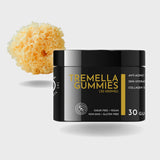
Our Tremella Gummies contain 1000mg of tremella, the mushroom traditionally known as the "beauty mushroom" in Chinese practice. They are sugar-free and vegan. They are not a substitute for sunscreen or medical skin care. You can read more in our tremella ingredient guide.
See a doctor if…
- you have a new or changing mole or spot, especially one that bleeds, itches or does not heal;
- you have persistent acne, rashes, eczema flares or pigmentation that do not respond to basic care;
- you develop a rash, hives or swelling after starting a supplement (stop it and seek care);
- you are pregnant or breastfeeding and want to use retinoids or supplements;
- you have a seafood or fish allergy and are considering marine collagen.
In an emergency, such as swelling of the face or difficulty breathing, call 112 or 10177.
Frequently asked questions
Do collagen supplements actually work for wrinkles?
Pooled studies look positive, but a 2025 meta-analysis found no significant benefit in high-quality or independently funded trials. The evidence is not strong enough to recommend collagen for wrinkles.
Is there vegan collagen?
No true collagen is vegan. "Vegan collagen" products contain plant ingredients, vitamins or amino acids intended to support the body's own collagen production.
What is the tremella mushroom good for?
It is traditionally used in Chinese cooking and beauty practice and is studied as a hydrating cosmetic ingredient. Evidence that eating or swallowing it improves skin is limited.
What is the best thing I can do for ageing skin?
Wear broad-spectrum sunscreen daily, especially in South Africa's high UV, avoid smoking, protect your sleep and consider a topical retinoid.
Can I take oral hyaluronic acid?
Small trials suggest it is well tolerated, but the evidence for skin benefits comes mainly from company-funded studies. Ask a pharmacist if you take medication.
Sources
- Myung SK, Park Y, et al. Effects of collagen supplements on skin aging: a systematic review and meta-analysis of randomized controlled trials. The American Journal of Medicine, 2025. https://www.sciencedirect.com/science/article/pii/S0002934325002839
- Pu SY, Huang YL, Pu CM, et al. Effects of oral collagen for skin anti-aging: a systematic review and meta-analysis. Nutrients, 2023. https://www.mdpi.com/2072-6643/15/9/2080
- Grimes DR, Mahto A. Hydrolysed collagen for skin aging meta-analyses are unreliable. OSF Preprints (not peer reviewed), 2025. https://doi.org/10.31219/osf.io/d7vs4_v1
- Hsu TF, Su ZR, Hsieh YH, et al. Oral hyaluronan relieves wrinkles and improves dry skin: a 12-week double-blinded, placebo-controlled study. Nutrients, 2021. https://www.mdpi.com/2072-6643/13/7/2220
- Choi JH, Kim B. Improvement of skin photoaging by polysaccharide extract derived from Tremella fuciformis (white jelly mushroom). Natural Product Sciences, 2021. https://doi.org/10.20307/nps.2021.27.4.300
- Hughes MCB, Williams GM, Baker P, Green AC. Sunscreen and prevention of skin aging: a randomized trial. Annals of Internal Medicine, 2013. https://doi.org/10.7326/0003-4819-158-11-201306040-00002
- Cancer Association of South Africa. Be SunSmart. CANSA. https://cansa.org.za/be-sunsmart/
- Mukherjee S, Date A, Patravale V, et al. Retinoids in the treatment of skin aging: an overview of clinical efficacy and safety. Clinical Interventions in Aging, 2006. https://doi.org/10.2147/ciia.2006.1.4.327
- Oyetakin-White P, Suggs A, Koo B, et al. Does poor sleep quality affect skin ageing? Clinical and Experimental Dermatology, 2014. https://doi.org/10.1111/ced.12455
- NHS. Benefits of quitting smoking. NHS Better Health. https://www.nhs.uk/better-health/quit-smoking/why-quit-smoking/benefits-of-quitting-smoking/
- NIH Office of Dietary Supplements. Biotin: fact sheet for consumers. https://ods.od.nih.gov/factsheets/Biotin-Consumer/
This article is for general information only and isn't medical advice. Elevate gummies are food supplements and are not intended to diagnose, treat, cure or prevent any disease. Speak to your doctor or pharmacist before starting any supplement, especially if you are pregnant, breastfeeding, taking medication or have a medical condition.