Sleepmaxxing: The Sleep Trend Fact-Checked for Recovery and Performance
Deel
Short answer: "sleepmaxxing" is a social media trend about squeezing the most out of your sleep with gadgets, tapes and bedtime drinks. The core idea is sound: sleep matters a great deal for training, recovery and performance, and a small Stanford study found basketball players ran faster and shot more accurately after extending their sleep. But several of the viral hacks, especially mouth taping, have little evidence behind them and some carry real risks. The basics (enough hours, a regular schedule, a dark, cool room) still do most of the work.
What is sleepmaxxing?
Sleepmaxxing is a TikTok and YouTube trend in which creators share routines to "max out" sleep quality. Typical content includes:
- taping the mouth shut at night to force nose breathing;
- "sleepy girl mocktails" and magnesium drinks before bed;
- sleep trackers, smart rings and apps that score every night;
- blackout blinds, eye masks, cold bedrooms, white noise and blue-light glasses;
- stacks of supplements, from magnesium to herbal blends.
Some of this is sensible sleep hygiene with a new name. Some of it is marketing. The useful question is which parts are backed by research, especially if you train, play sport or simply want to recover better.
How much sleep do you actually need?
According to the US Centers for Disease Control and Prevention (CDC), based on consensus statements from sleep medicine bodies:
- teenagers (13 to 17 years) need 8 to 10 hours a night;
- adults aged 18 to 60 need 7 or more hours;
- adults aged 61 to 64 need 7 to 9 hours, and those 65 and older 7 to 8 hours.
The CDC also stresses that quality matters as much as quantity: uninterrupted, refreshing sleep, not just time in bed.
Sleep and sports performance: what the research shows
The Stanford basketball study
The most quoted study in this space comes from Stanford University. Researchers asked 11 players from the men's varsity basketball team (average age about 19) to aim for at least 10 hours in bed every night after a period of their normal sleep. After the sleep-extension phase:
- timed sprint times improved from about 16.2 to 15.5 seconds;
- free-throw accuracy rose by 9 percentage points and three-point accuracy by 9.2 percentage points.
It is an encouraging result, but keep it in proportion: it involved only 11 athletes, there was no separate control group, and the players knew what was being tested. It suggests that many athletes are under-slept, rather than proving that extra sleep is a magic performance enhancer.
Sleep and injuries in young athletes
A survey of 112 adolescent athletes in the United States (average age 15), published in the Journal of Pediatric Orthopedics in 2014, found that those who slept fewer than 8 hours a night were 1.7 times more likely to have had a sports injury than those who slept 8 hours or more. This was an observational study, so it shows a link rather than cause and effect, but it fits with what coaches see: tired bodies make more mistakes. For school athletes juggling early practices, exams and screens, protecting sleep is one of the simplest things a parent or coach can do.
Why sleep matters for recovery
Sleep is when the body does much of its repair work and when the brain consolidates new skills. Most people know from experience that a run of short nights makes training feel harder and focus slip. If you are training hard, chasing a race goal or doing shift work, sleep is part of your training programme, not an afterthought.
Mouth taping: what the evidence says
Mouth taping is probably the most viral sleepmaxxing hack. Supporters claim it improves sleep quality, jawline, breath and energy. A 2025 systematic review in PLOS One by Canadian ear, nose and throat specialists pulled together 10 studies with 213 participants:
- only two small studies showed a meaningful drop in breathing interruptions, and only in people with mild obstructive sleep apnoea who did not have a blocked nose;
- the authors questioned whether even those changes were clinically meaningful;
- four of the 10 studies raised safety concerns, and the reviewers warned of a "potentially serious risk of harm" for people taping indiscriminately, including people with nasal blockage.
The Sleep Foundation adds that mouth taping is not advised for people with untreated sleep apnoea, nasal congestion, asthma or COPD, or for children. If you snore loudly, gasp at night or wake unrefreshed, the right step is a sleep assessment, not tape.
Magnesium drinks and "sleepy girl mocktails"
Magnesium is the supplement most often featured in sleepmaxxing videos. The research on magnesium and sleep is small and the effects so far are modest; we cover it in detail in Magnesium Glycinate for Sleep: Does It Actually Work?. Safety points from the US National Institutes of Health (NIH):
- adults should not take more than 350 mg a day of magnesium from supplements and medicines unless a doctor advises it (food magnesium does not count towards this limit);
- too much from supplements can cause diarrhoea, nausea and cramps;
- magnesium can reduce absorption of some antibiotics and osteoporosis medicines (bisphosphonates), so timing matters. Ask your pharmacist.
People with kidney disease should not take magnesium supplements without medical advice.
Sleep trackers and wearables: how accurate are they?
Smart rings and watches are central to sleepmaxxing culture. A 2021 study in the journal Sleep compared seven consumer devices with laboratory sleep studies (polysomnography) in 34 healthy young adults. Most devices were good at detecting sleep (sensitivity of 93% or higher) but weaker at detecting when people were actually awake, and their estimates of light, deep and REM sleep were inconsistent.
In practice:
- trackers are useful for spotting trends in your bedtime, wake time and total sleep;
- nightly "deep sleep" or "readiness" scores are estimates, not medical measurements;
- chasing a perfect score can backfire. Sleep researchers have described "orthosomnia", where people become anxious about their tracker data and sleep worse as a result.
If your tracker makes you more relaxed and consistent, great. If it makes you anxious, take it off for a week.
What actually helps: the evidence-based sleepmaxxing list
- Get enough hours. Most adults need 7 or more; teenagers 8 to 10. Athletes in heavy training may need more.
- Keep a regular schedule. Go to bed and wake at roughly the same times, including weekends.
- Make the room dark, quiet and cool. In South Africa that may mean blackout curtains for early summer sunrises and earplugs during load-shedding generator noise.
- Put screens away at least 30 minutes before bed (a CDC tip).
- Watch caffeine and alcohol. Limit caffeine in the afternoon and evening, and avoid heavy meals and alcohol close to bedtime. Pre-workout drinks often contain a lot of caffeine.
- Use naps wisely. A short early-afternoon nap may help on heavy training days, but long late naps can make night-time sleep harder.
- Get help for insomnia. If better habits have not helped, the NHS notes that a GP may offer cognitive behavioural therapy for insomnia (CBT-I), face to face or online, and that sleeping pills are now rarely prescribed. See our guide to natural sleep support.
Where Elevate fits
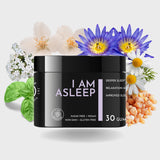
Supplements are optional extras on top of the basics above. Our sleep collection includes I AM ASLEEP Gummies, which combine six evening herbs including chamomile, valerian and blue lotus, plants traditionally used as part of a wind-down routine. They are sugar-free and vegan, and are not a substitute for enough sleep or for medical care if you have a sleep disorder.
See a doctor if…
- you or your partner notice loud snoring, choking or gasping, or pauses in breathing at night;
- you feel very sleepy during the day, or nod off while driving;
- you have had trouble sleeping for months, or it is making daily life hard to cope with;
- your low mood, worry or stress is affecting sleep. In South Africa you can call the SADAG helpline on 0800 567 567;
- you take regular medication and want to add a sleep supplement.
In an emergency, call 112 from a cellphone or 10177 for an ambulance.
Frequently asked questions
Is sleepmaxxing healthy?
The parts that focus on regular, sufficient sleep and a calm bedroom are healthy. Hacks like mouth taping, stacks of supplements or obsessing over tracker scores have weak evidence and can backfire.
Is mouth taping safe?
A 2025 review found little evidence of benefit outside a small group of people with mild sleep apnoea, and warned of potential harm, particularly for anyone with a blocked nose. Speak to a doctor before trying it, and do not use it on children.
How much sleep do athletes need?
At least the general recommendation (7 or more hours for adults, 8 to 10 for teens), and often more during heavy training. The Stanford study asked players to spend at least 10 hours in bed.
Are Oura rings and smartwatches accurate for sleep?
They are reasonably good at telling sleep from wake and tracking trends, but sleep-stage estimates (deep, light, REM) are much less reliable than a lab sleep study.
Does magnesium help you sleep?
Trials show small effects at best, mainly in people with low intake. Stay within 350 mg a day from supplements unless your doctor advises otherwise.
Sources
- Mah CD, Mah KE, Kezirian EJ, Dement WC. The effects of sleep extension on the athletic performance of collegiate basketball players. Sleep, 2011. https://pubmed.ncbi.nlm.nih.gov/21731144/
- Milewski MD, Skaggs DL, et al. Chronic lack of sleep is associated with increased sports injuries in adolescent athletes. Journal of Pediatric Orthopedics, 2014. https://pubmed.ncbi.nlm.nih.gov/25028798/
- Rhee J, Iansavitchene A, Mannala S, Graham ME, Rotenberg B. Breaking social media fads and uncovering the safety and efficacy of mouth taping in patients with mouth breathing, sleep disordered breathing, or obstructive sleep apnea: a systematic review. PLOS One, 2025. https://journals.plos.org/plosone/article?id=10.1371/journal.pone.0323643
- Chinoy ED, Cuellar JA, Huwa KE, et al. Performance of seven consumer sleep-tracking devices compared with polysomnography. Sleep, 2021. https://pubmed.ncbi.nlm.nih.gov/33378539/
- Baron KG, Abbott S, Jao N, Manalo N, Mullen R. Orthosomnia: are some patients taking the quantified self too far? Journal of Clinical Sleep Medicine, 2017. https://pubmed.ncbi.nlm.nih.gov/27855740/
- Centers for Disease Control and Prevention. About sleep. CDC. https://www.cdc.gov/sleep/about/index.html
- Sleep Foundation. Mouth taping for sleep (medically reviewed, updated 2026). https://www.sleepfoundation.org/sleep-hygiene/mouth-taping-for-sleep
- NHS. Insomnia. https://www.nhs.uk/conditions/insomnia/
- NIH Office of Dietary Supplements. Magnesium: fact sheet for consumers. https://ods.od.nih.gov/factsheets/Magnesium-Consumer/
This article is for general information only and isn't medical advice. Elevate gummies are food supplements and are not intended to diagnose, treat, cure or prevent any disease. Speak to your doctor or pharmacist before starting any supplement, especially if you are pregnant, breastfeeding, taking medication or have a medical condition.