Gut Microbiome Explained: Fibre, Fermented Foods and Probiotics
Deel
The short answer: your gut microbiome is the community of trillions of bacteria and other microbes living mainly in your large intestine. The best-supported ways to look after it are everyday ones: eat a wide variety of fibre-rich plants, include fermented foods, and limit ultra-processed food. Probiotic supplements help in a few specific situations, but the evidence for most everyday uses is weaker than marketing suggests.
What is the gut microbiome?
The microbes in your gut break down fibre your own body can't digest, producing compounds such as short-chain fatty acids that help nourish the cells lining your colon. They also interact with your immune system and help keep less friendly microbes in check. Everyone's microbiome is different, shaped by diet, medicines (especially antibiotics), age, where you live and genetics.
Researchers often use diversity (how many different types of microbes you have) as a rough marker of a healthy microbiome. It is a useful signal, but scientists are still working out exactly what an "ideal" microbiome looks like, so be wary of any test or product that promises to "fix" yours.
Fibre and plant diversity: the "30 plants a week" idea
The popular goal of eating 30 different plants a week comes from the American Gut Project, a large citizen-science study. In a 2018 analysis published in mSystems, people who ate more than 30 different plant types a week had more diverse gut microbiomes than those who ate 10 or fewer. The researchers were clear that this is an observation, not proof that hitting 30 plants causes better health.
Still, it is a practical way to think about fibre. The World Health Organization recommends that adults eat at least 400 g of vegetables and fruit and at least 25 g of naturally occurring dietary fibre a day. "Plants" counts more than fruit and veg:
- Vegetables and leafy greens (including morogo and other wild greens)
- Fruit
- Legumes: beans, lentils, split peas, chickpeas, soya
- Whole grains: oats, brown rice, whole-wheat bread, sorghum
- Nuts and seeds, including peanuts
- Herbs and spices
South Africa's Food-Based Dietary Guidelines already point in this direction, with messages to "eat plenty of vegetables and fruit every day" and "eat dry beans, split peas, lentils and soya regularly". If you're not used to much fibre, increase it gradually and drink enough water to limit bloating. Our guide to bloating and indigestion covers this in more detail.
Fermented foods: what the Stanford study found
In a 2021 randomised study published in Cell, Stanford researchers assigned 36 healthy adults to a diet high in either fermented foods or fibre for 10 weeks. The fermented-food group's microbiome diversity increased, with bigger effects at higher servings, and levels of 19 inflammatory proteins in the blood (including interleukin-6) went down. In the high-fibre group, diversity stayed stable over the study period and those inflammatory markers did not fall.
It was a small study in healthy people, so it shows a promising effect on lab markers, not a proven health outcome. But fermented foods are easy to include. South African options include:
- Amasi (maas): fermented milk; commercial versions are made with lactic acid bacteria starter cultures. The dietary guidelines say "have milk, maas or yoghurt every day".
- Mageu (amahewu): a traditionally fermented maize drink. Check the label for added sugar.
- Yoghurt and kefir with live cultures.
- Sauerkraut, kimchi and other fermented vegetables.
Ultra-processed food and the gut
A 2024 review in Nature Reviews Gastroenterology & Hepatology found that diets high in ultra-processed foods are associated with gut conditions such as inflammatory bowel disease, colorectal cancer and IBS. Animal and lab studies show some additives, including certain emulsifiers and sweeteners, can affect the microbiome and gut lining. However, the authors note that few human intervention studies exist, so cause and effect is not yet established. A sensible takeaway: base most meals on minimally processed foods, without fearing every packaged item.
The gut–brain axis: how strong is the evidence?
The gut and brain communicate through nerves (especially the vagus nerve), hormones, immune signals and microbial by-products. This "gut–brain axis" is one of the most exciting areas of research, but most of the strongest evidence comes from animal studies, such as germ-free mice. Human studies are still largely observational, showing links between certain microbes and mood or quality of life, without proving which comes first. A 2025 review in Frontiers in Psychiatry highlighted a few probiotic strains that affected stress markers in human studies, but this remains early research. Nothing here replaces proven mental health care. If you are struggling, contact SADAG on 0800 567 567.
Probiotic supplements: what the evidence supports
| Use | What guidelines and reviews say |
|---|---|
| Reducing C. difficile risk in adults and children taking antibiotics | Conditional recommendation for certain probiotics (AGA 2020) |
| Antibiotic-associated diarrhoea | Reviews suggest a reduced risk with some probiotics (NCCIH) |
| Preterm, low-birth-weight babies | Specific products used under hospital supervision (AGA 2020) |
| IBS | AGA recommended against routine use outside clinical trials; the evidence was judged too uncertain |
| Crohn's disease and ulcerative colitis | AGA recommended against outside clinical trials |
| General "gut health" in healthy people | No clear evidence of benefit |
Effects are strain-specific: a strain studied for one purpose may do nothing for another. Probiotics are not suitable for everyone; serious infections have been reported in premature infants, and people who are seriously ill or have a weakened immune system should check with their doctor first.
Trends: keep it simple
Social media is full of gut trends, from "fibre-maxxing" to specific bacteria such as akkermansia. The fundamentals above have the best evidence, and we cover those trends in a separate article. Pushing fibre up too fast is a common cause of extra gas, so build up slowly.
Where Elevate fits
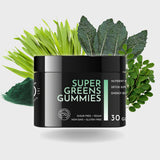
Super Greens Gummies contain spirulina, moringa, chlorella and barley grass. They can be a convenient addition, but they don't provide the fibre of whole vegetables and are not a substitute for eating your plants. Sea Moss Gummies provide 1000mg of sea moss, a seaweed that is a source of iodine; if you have a thyroid condition or take thyroid medication, speak to your doctor first, as too much iodine can affect thyroid function. See our sea moss ingredient guide or find your gummy.
See a doctor if…
- You have a lasting change in bowel habit (looser, more frequent or constipated) for more than a few weeks.
- You notice blood in your stool or black, tarry stools.
- You are losing weight without trying, or feel very tired or short of breath.
- You have ongoing tummy pain, bloating or a lump in your tummy.
- You have severe diarrhoea with fever or signs of dehydration, especially after antibiotics.
In an emergency, call 112 or 10177.
Frequently asked questions
What is the fastest way to improve gut health?
There is no quick fix. Adding a variety of plants, fibre and fermented foods over weeks, while cutting back on ultra-processed food, is the approach with the best evidence.
Do I need to eat exactly 30 plants a week?
No. The number comes from an observational study. Any increase in plant variety is a step in the right direction.
Is amasi good for your gut?
Amasi is a fermented milk made with lactic acid bacteria, and fermented foods have been linked to greater microbiome diversity in research. Choose plain versions to limit added sugar.
Should I take a probiotic every day?
For most healthy people there is no clear benefit. They may be useful in specific situations, such as with some courses of antibiotics; ask your pharmacist which strain has evidence for your situation.
Can gut health affect mood?
Research suggests the gut and brain are connected, but human evidence is still early. Sleep, exercise, social support and professional care remain the foundations of mental health.
Sources
- McDonald D et al. American Gut: an open platform for citizen science microbiome research. mSystems, 2018, via ScienceDaily (UC San Diego). https://www.sciencedaily.com/releases/2018/05/180515092931.htm
- Stanford Medicine. Fermented-food diet increases microbiome diversity, decreases inflammatory proteins (Wastyk HC et al., Cell), 2021. https://med.stanford.edu/news/all-news/2021/07/fermented-food-diet-increases-microbiome-diversity-lowers-inflammation.html
- World Health Organization. WHO updates guidelines on fats and carbohydrates, 2023. https://www.who.int/news/item/17-07-2023-who-updates-guidelines-on-fats-and-carbohydrates
- FAO. Food-based dietary guidelines: South Africa. https://www.fao.org/nutrition/education/food-dietary-guidelines/regions/countries/south-africa/en/
- Maleke MS et al. Processing, nutritional composition and microbiology of amasi: a Southern African fermented milk product. Scientific African, 2021. https://www.sciencedirect.com/science/article/pii/S2468227621000995
- Whelan K, Bancil AS, Lindsay JO, Chassaing B. Ultra-processed foods and food additives in gut health and disease. Nature Reviews Gastroenterology & Hepatology, 2024. https://www.nature.com/articles/s41575-024-00893-5
- Bautista et al. The gut–brain–circadian axis in anxiety and depression: a critical review. Frontiers in Psychiatry, 2025. https://www.frontiersin.org/journals/psychiatry/articles/10.3389/fpsyt.2025.1697200/full
- ISAPP. Take-home points from American Gastroenterological Association guidelines on probiotic use for gastrointestinal disorders, 2020. https://isappscience.org/isapp-take-home-points-from-american-gastroenterological-association-guidelines-on-probiotic-use-for-gastrointestinal-disorders/
- National Center for Complementary and Integrative Health (NCCIH). Probiotics: what you need to know. https://www.nccih.nih.gov/health/probiotics-what-you-need-to-know
- NIH Office of Dietary Supplements. Iodine: fact sheet for consumers, 2024. https://ods.od.nih.gov/factsheets/Iodine-Consumer/
This article is for general information only and isn't medical advice. Elevate gummies are food supplements and are not intended to diagnose, treat, cure or prevent any disease. Speak to your doctor or pharmacist before starting any supplement, especially if you are pregnant, breastfeeding, taking medication or have a medical condition.