Akkermansia, Fibre-Maxxing and Gut Trends: What the Evidence Says
Deel
Of this year's gut-health trends, eating more fibre ("fibre-maxxing") has the strongest evidence behind it, as long as you build up slowly. Akkermansia is a promising gut bacterium, but human research is still small and early. Postbiotics are a real scientific category with a formal definition, though evidence differs from product to product. Sea moss has little human research behind its health claims, and home gut-microbiome tests are not yet considered useful for guiding treatment.
Gut health has become one of the biggest wellness topics online, with new buzzwords every few months. Some trends line up well with decades of nutrition research. Others are built on a single small study or a clever marketing story. Here is how to tell them apart.
Fibre-maxxing: the trend experts actually like
"Fibre-maxxing" simply means deliberately eating a lot more fibre: adding beans, lentils, seeds, oats, vegetables and fruit to every meal. Unusually for a social media trend, nutrition researchers have broadly welcomed it. A researcher at KU Leuven told Euronews in 2025 that higher fibre intake is associated with lower cholesterol, blood sugar and inflammation.
What the evidence shows
The strongest research comes from a 2019 series of systematic reviews and meta-analyses commissioned by the World Health Organization and published in The Lancet. It pooled 185 long-term observational studies and 58 clinical trials. People who ate the most fibre had a 15 to 30% lower risk of dying from any cause and of heart disease, stroke, type 2 diabetes and bowel cancer compared with those who ate the least. The greatest benefit was seen at 25 to 29 g of fibre a day, with signs that more could be better still.
These are associations from food-based diets, not proof that any single fibre supplement has the same effect.
How much fibre do South Africans need and eat?
Recommendations vary slightly by country. The NHS recommends 30 g a day for adults, while US guidance (used in many South African studies) is 25 g for women and 38 g for men. Most people fall well short: the UK average is about 20 g.
South African data are limited, but a 2018 study of 627 young adults aged 18 to 30 in a rural area found more than 97% ate less fibre than recommended. Refined maize meal, white bread and fast food are all low in fibre, so many of us have room to improve.
Easy local fibre wins
- Swap white bread for brown, wholewheat or seed bread.
- Choose oats, maltabella or high-fibre cereal at breakfast.
- Add beans, lentils or chickpeas to stews, curries, mince and soups; samp and beans is a fibre classic.
- Eat leafy greens such as morogo, spinach or cabbage, and add chakalaka to meals.
- Keep the skin on potatoes, sweet potatoes and apples.
- Snack on fruit, nuts, seeds or popcorn instead of chips.
Where fibre-maxxing goes wrong
- Too much, too fast. A sudden jump can cause gas, cramps and bloating. Add one high-fibre food every few days.
- Not enough fluid. Fibre needs water to work well. Drink more as you eat more fibre.
- Relying on powders. Whole foods bring a mix of fibre types plus vitamins and polyphenols that a single powder does not.
- Not right for everyone. People with irritable bowel syndrome (IBS), inflammatory bowel disease, a history of bowel obstruction, or slowed stomach emptying (including some people on GLP-1 medicines such as Ozempic) should get personalised advice. See our guide to nutrition on GLP-1 medicines.
- Medicines. Large amounts of fibre supplements can affect how some medicines are absorbed; ask your pharmacist about timing.
Akkermansia: the "next-generation" gut bacterium
Akkermansia muciniphila is a bacterium that lives in the mucus layer lining the gut. It became famous after animal studies showed metabolic effects, and observational studies in people found lower levels in those with overweight, obesity, untreated type 2 diabetes or high blood pressure. Correlation is not cause, though: it is not clear whether low Akkermansia is a cause or a consequence. That has led to a wave of Akkermansia supplements, mainly sold online.
What human studies show
The key human trial is a 2019 proof-of-concept study in Nature Medicine. Forty adults with overweight or obesity and insulin resistance were randomised to live Akkermansia, pasteurised (heat-killed) Akkermansia or placebo for three months; 32 completed it. Compared with placebo, the pasteurised form improved insulin sensitivity by about 29% and lowered blood insulin and total cholesterol. Changes in body weight (about 2.3 kg) and fat mass were small and not statistically significant. It was safe and well tolerated.
That is encouraging, but it is one small, short study. The authors described it as exploratory, and larger, longer trials are needed before anyone can say what Akkermansia supplements do for health.
Regulatory status
In 2022 the European Union authorised pasteurised Akkermansia muciniphila as a novel food for use in food supplements, after a 2021 safety opinion from the European Food Safety Authority. The authorisation is about safety, not proof of benefit. It is for adults only, and the conditions of use exclude pregnant and breastfeeding women and advise against use by people taking antibiotics. Live Akkermansia products sold elsewhere fall under different rules.
Can you raise Akkermansia with food?
Researchers are studying whether certain foods support Akkermansia, but this work is still early. Eating a varied, high-fibre diet is a sensible approach for your gut bacteria overall, whether or not it changes Akkermansia specifically.
Postbiotics: what the word means
You will see "postbiotic" on more labels. In 2021 the International Scientific Association for Probiotics and Prebiotics (ISAPP) defined a postbiotic as "a preparation of inanimate microorganisms and/or their components that confers a health benefit on the host".
- Probiotics are live microbes with a demonstrated health benefit.
- Prebiotics are food for your beneficial gut microbes, often types of fibre.
- Postbiotics are deliberately inactivated microbes or their parts. Pasteurised Akkermansia is an example of this idea.
ISAPP stresses that a postbiotic is not simply a "dead probiotic"; it has to be shown to benefit health. So the term itself tells you nothing about whether a specific product works. Look for human studies on that exact product.
Sea moss: nutrients, hype and iodine
Sea moss is a red seaweed that contains minerals including iodine, plus soluble fibre. Social media credits it with dozens of benefits. The US Department of Defense's Operation Supplement Safety programme notes there is not enough reliable evidence to confirm whether sea moss supplements are safe or effective, because human clinical research is lacking.
The main things to know:
- Iodine content varies widely between batches and sources, and too much iodine can upset thyroid function.
- Some seaweeds grown in polluted water have been found to contain arsenic, mercury or lead, so sourcing matters.
- Anyone with a thyroid condition, or who is pregnant or breastfeeding, should speak to a doctor first.
More detail is in our sea moss guide.
Gut microbiome tests: worth it?
Home kits that analyse a stool sample and suggest foods or supplements are a growing business. In a 2024 international consensus statement in The Lancet Gastroenterology & Hepatology, 69 experts from 18 countries concluded there is not enough evidence to recommend routine microbiome testing in clinical practice. They discouraged people from ordering tests without a clinical reason and said reports should not include treatment recommendations.
The science of the microbiome is exciting, but we do not yet know what a "healthy" microbiome looks like for each person. If you have ongoing gut symptoms, a doctor can arrange tests that are actually validated for diagnosis.
Trend scorecard
| Trend | Evidence | Bottom line |
|---|---|---|
| Fibre-maxxing | Strong (large reviews of food-based fibre) | Worth doing; go slowly and drink water |
| Akkermansia | Early (one small human trial) | Interesting, not proven |
| Postbiotics | Depends on the product | Ask for human studies |
| Sea moss | Little human research | A mineral source; watch iodine |
| Microbiome tests | Not validated for guiding treatment | Not recommended without a clinical reason |
Where Elevate fits
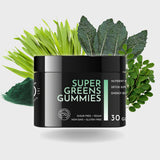
Our Super Greens Gummies contain spirulina, moringa, chlorella and barley grass, and our Sea Moss Gummies contain 1,000 mg of sea moss, a natural source of iodine. Neither replaces vegetables, fruit, beans and wholegrains, which are where your fibre should come from. If you have a thyroid condition, check with your doctor before taking sea moss. You can read more in our sea moss ingredient guide, and for the basics of digestion see our gut health guide.
See a doctor if…
- You see blood in your stool or have black, tarry stools.
- You have unexplained weight loss, persistent vomiting or difficulty swallowing.
- Your bowel habits change and the change lasts more than a few weeks.
- You have severe or worsening abdominal pain, or pain that wakes you at night.
- Bloating is constant, or comes with a swollen tummy that does not go down.
- You have diarrhoea for more than a few days, signs of dehydration, or a fever.
In an emergency, call 112 or 10177.
Frequently asked questions
Is fibre-maxxing healthy?
Eating more fibre from whole foods is strongly supported by research. Increase it gradually and drink more water to avoid bloating. People with IBS or other bowel conditions should get personal advice.
How much fibre should I eat a day?
About 25 to 30 g for most adults, depending on which guideline you use. Most people eat far less.
Should I take an Akkermansia supplement?
The evidence is still early, mainly one small trial of the pasteurised form. In the EU it is authorised for adults only and not for pregnant or breastfeeding women. Speak to your doctor if you are considering it.
What is the difference between prebiotics, probiotics and postbiotics?
Prebiotics feed beneficial gut microbes, probiotics are live beneficial microbes, and postbiotics are inactivated microbes or their parts that have been shown to benefit health.
Are gut microbiome tests accurate?
They can describe which bacteria are in a sample, but experts say there is not enough evidence to use them to guide diet or treatment for most people.
Sources
- Reynolds A, Mann J, Cummings J, et al. Carbohydrate quality and human health: a series of systematic reviews and meta-analyses. The Lancet, 2019. University of Dundee
- NHS. How to get more fibre into your diet. nhs.uk
- Sekgala MD, et al. Dietary fiber intake and metabolic syndrome risk factors among young South African adults. Nutrients, 2018. mdpi.com
- Euronews. Fibremaxxing: why nutrition experts can actually get behind TikTok's latest wellness trend. 2025. euronews.com
- Depommier C, et al. Supplementation with Akkermansia muciniphila in overweight and obese human volunteers: a proof-of-concept exploratory study. Nature Medicine, 2019. nature.com
- European Commission. Commission Implementing Regulation (EU) 2022/168 authorising pasteurised Akkermansia muciniphila as a novel food. 2022. eur-lex.europa.eu
- FoodTimes. Akkermansia muciniphila: green light in the EU for next-generation probiotic. 2022. foodtimes.eu
- International Scientific Association for Probiotics and Prebiotics (ISAPP). The concept of postbiotics. isappscience.org
- Porcari S, Mullish BH, Asnicar F, et al. International consensus statement on microbiome testing in clinical practice. The Lancet Gastroenterology & Hepatology, 2025. Wageningen University
- Operation Supplement Safety (US Department of Defense). Sea moss in dietary supplements. 2021. opss.org
This article is for general information only and isn't medical advice. Elevate gummies are food supplements and are not intended to diagnose, treat, cure or prevent any disease. Speak to your doctor or pharmacist before starting any supplement, especially if you are pregnant, breastfeeding, taking medication or have a medical condition.