Kanna (Sceletium): South Africa's Mood Herb Explained
Deel
Kanna (Sceletium tortuosum, now also classified as Mesembryanthemum tortuosum) is a succulent from the Western and Northern Cape that the San and Khoi peoples have chewed for generations to ease tension, thirst and hunger and lift mood. Its main alkaloid, mesembrine, acts on serotonin in a similar way to some antidepressants, and small human trials of one standardised extract (Zembrin) have looked at stress, anxiety and thinking skills, with encouraging but early results. Because of how it works, kanna must not be combined with antidepressants (SSRIs, SNRIs or MAOIs) or other serotonin-affecting medicines.
Kanna has become a global trend, sold overseas in everything from capsules to chocolates and concentrated extracts. But it is a South African plant with a long local history, and a story about who should benefit when traditional knowledge is turned into products. Here is the full picture.
What is kanna?
Kanna, also called sceletium, kougoed or channa, is a low-growing succulent that grows in the dry Karoo and Namaqualand regions. Traditionally, the San and Khoi prepared the plant (often by crushing and fermenting it) and chewed it. It was used to cope with long journeys, hunger and thirst, and for social and spiritual purposes.
Much of that traditional knowledge was lost or disrupted during colonisation. Today, cultivated kanna is grown commercially in South Africa and exported worldwide.
How does kanna work? Mesembrine explained
Kanna contains a group of alkaloids, the best known being mesembrine. Lab research suggests it works in two main ways:
- Serotonin reuptake inhibition: it blocks the serotonin transporter, the same target as SSRI antidepressants, which keeps more serotonin active between nerve cells.
- PDE4 inhibition: it blocks an enzyme called phosphodiesterase-4, which is involved in brain signalling and inflammation.
A 2013 brain-imaging study in Neuropsychopharmacology described the standardised extract Zembrin as a "dual 5-HT reuptake and PDE4 inhibitor". This mechanism explains both why researchers are interested in kanna and why it can interact with medicines.
What the clinical trials show
Nearly all human research uses Zembrin, a standardised extract developed in South Africa, at doses of 8 to 25 mg of extract a day. The trials are small and short, and almost all tested this one commercial extract, so results should be read with caution and may not apply to other kanna products.
| Study | Who and how | What was found |
|---|---|---|
| Nell et al., 2013 | 37 healthy adults, 8 mg or 25 mg a day, 3 months, randomised and placebo-controlled | Well tolerated at both doses; no more side effects than placebo. Some participants reported better coping with stress. |
| Terburg et al., 2013 | 16 healthy adults, single 25 mg dose, crossover, brain scans | Reduced reactivity of the amygdala (the brain's threat centre) to fearful faces. |
| Chiu et al., 2014 | 21 healthy adults (average age about 55), 25 mg a day for 3 weeks, crossover | Improved cognitive flexibility and executive function compared with placebo. |
| Reay et al., 2020 | Healthy volunteers, single 25 mg dose, under a lab stress test | Lower self-reported anxiety before the stressor than with placebo. |
| Hoffman et al., 2020 | 60 young adults, 25 mg a day for 8 days | Better performance on a complex reaction task under mental load; no clear effect on mood. |
The honest summary: kanna has been studied for stress, anxiety and cognitive performance in healthy people, with some positive signals. It has not been shown to work for depression or anxiety disorders, which need proper medical care. No trial has lasted longer than three months. For practical, non-supplement ways to handle ongoing stress, see burnout: signs and recovery.
Also note that trial doses refer to a specific concentrated extract. Supplements label their extracts in different ways, so a milligram figure on one product cannot be directly compared with the 25 mg used in the studies.
Kanna and antidepressants: a serious interaction
This is the most important safety point. Because kanna blocks serotonin reuptake (and lab studies suggest it may also mildly inhibit the enzyme MAO-A), combining it with other serotonin-affecting medicines could, in theory, raise serotonin too high. This can lead to serotonin syndrome, a potentially dangerous reaction.
Do not take kanna if you use:
- SSRIs, such as fluoxetine, sertraline, citalopram, escitalopram or paroxetine
- SNRIs, such as venlafaxine or duloxetine
- MAOIs or tricyclic antidepressants
- Other serotonin-affecting medicines, such as tramadol, triptans for migraine, lithium or some anti-nausea medicines
- Other serotonin-affecting supplements, such as St John's wort or 5-HTP
Never stop or swap a prescribed antidepressant for kanna or any supplement. Stopping suddenly can cause withdrawal symptoms and relapse. Speak to your doctor if you are unhappy with your treatment.
Who else should avoid kanna
- Pregnant or breastfeeding women (no safety data)
- People with bipolar disorder or a history of psychosis, unless their doctor agrees
- People with heart conditions or on several chronic medicines: ask your pharmacist first
- Anyone under 18
Reported side effects in trials were mild, but kanna may make some people feel drowsy or "spaced out", especially at higher amounts. Avoid alcohol and see how you react before driving.
Kanna in South Africa vs the overseas hype
In the US and Europe, kanna is often marketed with bold mood and "euphoria" claims, as high-strength concentrates or in forms meant for smoking. Those claims go far beyond the evidence, and high-strength concentrates have not been tested for safety in trials.
It is also not legal everywhere in the same way. For example, the US state of Louisiana's hallucinogenic plant law lists the Mesembryanthemum genus (which now includes kanna) among plants it restricts for human consumption, with exceptions for properly made dietary supplements. In South Africa, kanna is legal and sold as a food supplement and traditional herb.
Who benefits? Kanna, the San and benefit-sharing
Kanna is one of the best-known examples of indigenous knowledge turning into a global product, alongside rooibos and hoodia. The Nagoya Protocol, an international agreement under the Convention on Biological Diversity, sets out the principle that communities whose traditional knowledge leads to commercial products should share fairly in the benefits.
The developers of Zembrin, the most-studied kanna extract, describe it as developed through a benefit-sharing partnership with the South African San Council. If kanna's origins matter to you, it is reasonable to ask any brand where its sceletium is grown and how it is sourced.
See a doctor if…
- You take any antidepressant or mood medication and are thinking about kanna: talk to your doctor or pharmacist first
- After taking kanna you develop agitation, confusion, a racing heart, high temperature, heavy sweating, muscle twitching, shivering or diarrhoea. These can be signs of serotonin syndrome: stop it and get urgent help on 112 or 10177
- Your low mood, anxiety or stress has lasted more than two weeks or is affecting work, relationships or sleep. Call SADAG on 0800 567 567 for free support
- You have thoughts of harming yourself: call SADAG's suicide crisis line on 0800 567 567 or go to your nearest emergency unit
Where Elevate fits
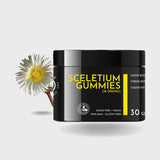
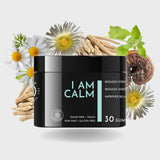
Our Sceletium Gummies contain 600mg sceletium extract per gummy, and sceletium is also one of four herbs in I AM CALM Gummies. Sceletium is traditionally used by the San and Khoi peoples to support a positive mood and ease everyday tension. Do not use either product with antidepressants or other mood medication, or if you are pregnant or breastfeeding. Read more in our sceletium ingredient guide, or browse the calm collection.
Frequently asked questions
Is kanna the same as sceletium?
Yes. Kanna, sceletium, kougoed and channa are names for the same South African plant, Sceletium tortuosum.
Can I take kanna with sertraline or other SSRIs?
No. Kanna acts on the same serotonin system and combining them could cause serotonin syndrome. Speak to your doctor instead.
Does kanna get you high?
At supplement doses, trial participants did not report intoxication. Overseas, high-strength concentrates are marketed for stronger effects; these have not been tested for safety.
How long does kanna take to work?
Some studies looked at a single dose, with effects measured within hours. Others used daily doses for three weeks to three months. There is no evidence on long-term use beyond that.
Is kanna legal in South Africa?
Yes, kanna is legal and widely sold in South Africa as a food supplement and traditional herb.
Is kanna addictive?
No addiction has been reported in the clinical trials, but they were short. Use it as directed and take breaks.
Sources
- Nell H, et al. A randomized, double-blind, parallel-group, placebo-controlled trial of extract Sceletium tortuosum (Zembrin) in healthy adults. Journal of Alternative and Complementary Medicine, 2013. pubmed.ncbi.nlm.nih.gov/23441963
- Terburg D, et al. Acute effects of Sceletium tortuosum (Zembrin), a dual 5-HT reuptake and PDE4 inhibitor, in the human amygdala and its connection to the hypothalamus. Neuropsychopharmacology, 2013. pubmed.ncbi.nlm.nih.gov/23903032
- Chiu S, et al. Proof-of-concept randomized controlled study of cognition effects of the proprietary extract Sceletium tortuosum (Zembrin) targeting phosphodiesterase-4 in cognitively healthy subjects: implications for Alzheimer's dementia. Evidence-Based Complementary and Alternative Medicine, 2014. pubmed.ncbi.nlm.nih.gov/25389443
- Reay J, et al. Sceletium tortuosum (Zembrin) ameliorates experimentally induced anxiety in healthy volunteers. Human Psychopharmacology, 2020. pubmed.ncbi.nlm.nih.gov/32761980
- Hoffman JR, et al. Ergogenic effects of 8 days of Sceletium tortuosum supplementation on mood, visual tracking, and reaction in recreationally trained men and women. Journal of Strength and Conditioning Research, 2020. pubmed.ncbi.nlm.nih.gov/32740286
- Examine.com. Sceletium tortuosum (kanna). examine.com
- Zembrin. The science behind Zembrin (San Council benefit-sharing partnership). zembrin.com
- Louisiana Revised Statutes 40:989.1. Hallucinogenic plants (2025 text). law.justia.com
This article is for general information only and isn't medical advice. Elevate gummies are food supplements and are not intended to diagnose, treat, cure or prevent any disease. Speak to your doctor or pharmacist before starting any supplement, especially if you are pregnant, breastfeeding, taking medication or have a medical condition.