Mushroom Coffee and Lion's Mane: What's Behind the Trend?
Deel
Short answer: mushroom coffee is usually regular coffee blended with powdered mushroom extracts such as lion's mane, chaga, reishi or cordyceps. Its clearest difference from normal coffee is that it often contains less caffeine per cup. Human research on the mushrooms themselves is still early and small, and the quality of products varies a lot, so read the label carefully.
Functional mushroom drinks have moved from niche health shops to supermarket shelves and social media feeds. Market researchers Grand View Research value the global mushroom coffee market at about US$3.1 billion in 2025, projected to reach roughly US$5.1 billion by 2033. Lion's mane is one of the most-searched ingredients in the category. So what are you actually drinking, and is it worth the price?
What is mushroom coffee?
Most products are instant or ground coffee mixed with dried mushroom powder or extract. Some are coffee-free "coffee alternatives" made from mushrooms, cacao, chicory or herbal blends. Common mushrooms include:
- Lion's mane (Hericium erinaceus): studied for focus and memory, with small human trials.
- Chaga (Inonotus obliquus): the biggest-selling extract by market share according to Grand View Research; most of its research is laboratory-based.
- Reishi (Ganoderma lucidum): traditionally used in East Asia as a calming tonic.
- Cordyceps: studied for exercise performance; human evidence is limited.
These functional mushrooms are not psychoactive.
Caffeine: mushroom coffee vs regular coffee
Because part of each scoop is mushroom powder rather than coffee, mushroom coffee typically has less caffeine. Exact amounts vary by brand, so check the label.
| Drink | Approximate caffeine |
|---|---|
| Mushroom coffee (many brands) | About 30 to 60 mg per serving |
| Cup of filter coffee | About 90 mg |
| Single espresso | About 80 mg |
| EFSA safe limit for healthy adults | Up to 400 mg a day; 200 mg at once |
Doctors interviewed by NBC News point out that the most reliable benefit may simply be drinking less caffeine, which can help sleep and jitteriness. If you switch from three strong mugs to mushroom coffee, you may feel calmer, but that could be the caffeine reduction rather than the mushrooms.
What does the research on lion's mane show?
Lion's mane is the star of most "focus" blends. The human evidence is real but limited:
- The Alzheimer's Drug Discovery Foundation's Cognitive Vitality review (updated 2025) counts seven small randomised trials, each with 30 to 41 participants and lasting 4 to 16 weeks. Results have been inconsistent.
- A 2023 pilot trial in Nutrients (Docherty and colleagues) gave 41 healthy adults aged 18 to 45 either 1.8 g of lion's mane a day or a placebo. Participants were faster on one attention test (the Stroop task) an hour after a dose, but there was no improvement in overall cognition or memory after 28 days, and one recall test was actually worse. The trend towards lower stress did not reach statistical significance.
- A 2026 trial in 109 adults (Daoust and colleagues) reported better scores on a visual attention and working memory task after eight weeks of 2 g a day, plus improved self-rated sleep and mood. It is a preprint that has not yet been peer reviewed, and it was funded by the supplier.
Most of the excitement about lion's mane and nerve growth factor comes from laboratory and animal studies. These are useful leads, not proof of effects in people. A cup of mushroom coffee may also contain much less mushroom than the doses used in trials (1.8 to 2 g a day), so check how many milligrams each serving actually provides.
Fruiting body vs mycelium on grain: the hidden quality issue
A mushroom has two main parts: the fruiting body (the mushroom you can see) and the mycelium (the root-like network). Some products use mycelium grown on rice, oats or other grain, and sell the whole mass, grain included, as "mushroom powder". That means part of what you are paying for can be grain starch rather than mushroom compounds.
Mushrooms' signature compounds include beta-glucans. Grain starch is made of alpha-glucans. Lab methods such as the one published by McCleary and Draga in the Journal of AOAC International (2016) measure total glucans, starch and beta-glucans separately, which allows these to be told apart. The Cognitive Vitality review also notes that different studies used different preparations (fruiting body, mycelium, different extracts), which makes it hard to compare products with the research.
How to read a mushroom coffee label
- Milligrams per serving: look for the amount of each mushroom, not just a "proprietary blend" total.
- Part used: "fruiting body" or "mycelium"? If mycelium, is it "on grain" or "myceliated grain"?
- Extract or powder: extracts (for example, hot-water extracts) are more concentrated than plain dried powder.
- Beta-glucan content: better brands state a beta-glucan percentage, ideally tested by an independent lab.
- Caffeine: stated in mg per serving.
- Added sugar and creamers: many "latte" blends contain sugar, milk powder or coconut creamer.
- Claims: be wary of products promising to "boost brain power" or protect against disease. No mushroom drink is approved to do that.
Who should avoid mushroom coffee or mushroom supplements?
- Anyone allergic to mushrooms or moulds. Rare allergic reactions, skin rashes and stomach upset have been reported with lion's mane.
- Pregnant or breastfeeding women, because safety data are lacking.
- People on blood thinners (such as warfarin): chaga and reishi may add to bleeding risk.
- People on diabetes medicine: chaga has shown blood-sugar-lowering effects in lab studies.
- People with kidney problems: Memorial Sloan Kettering lists case reports of serious kidney damage linked to long-term, high-dose chaga powder, which is high in oxalates.
- Anyone sensitive to caffeine, with heart rhythm problems or anxiety, should still count the caffeine.
- Anyone taking regular medication, or due for surgery: ask your pharmacist first.
- Children and teens.
Is mushroom coffee worth it?
If you enjoy the taste and want a lower-caffeine coffee, it can be a reasonable swap. If you are buying it specifically for focus, the honest answer is that the human evidence is early, the doses in a cup may be low, and quality is hard to judge. A cheaper alternative is simply halving your coffee, sleeping well and getting regular exercise, all of which have stronger evidence for alertness.
Where Elevate fits
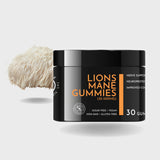
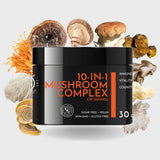
If you would rather keep your coffee as it is and take mushrooms separately, Elevate's Lion's Mane Gummies contain 1000mg lion's mane extract, and the 10-in-1 Mushroom Complex Gummies combine ten mushrooms including lion's mane, cordyceps, reishi and chaga. Both are caffeine-free. Lion's mane has been studied for focus in small trials with mixed results, as described above. Learn more in our lion's mane ingredient guide or browse the focus collection.
See a doctor if…
- you develop a rash, wheezing, swelling of the lips or face, or difficulty breathing after taking a mushroom product (call 112 or 10177 for breathing difficulty);
- you notice unusual bruising or bleeding while on blood thinners;
- you have palpitations, chest pain or severe anxiety after caffeine;
- you have ongoing memory or concentration problems: these deserve a proper medical check-up, not a supplement.
Frequently asked questions
Does mushroom coffee have caffeine?
Most do, unless labelled caffeine-free. Many brands contain about 30 to 60 mg per serving, less than a typical filter coffee.
Does mushroom coffee taste like mushrooms?
Usually not much. Most taste like a slightly earthier, milder coffee, especially with milk.
Can I drink mushroom coffee every day?
Many healthy adults do, but long-term safety data on daily mushroom extracts are limited. Avoid it if you are pregnant, take blood thinners or diabetes medication, or have kidney problems, unless your doctor agrees.
Is lion's mane better as a fruiting body or mycelium?
There is no definitive answer, as studies have used different preparations. What matters most is knowing what you are getting: the part used, whether grain is included, the dose and the tested beta-glucan content.
Will mushroom coffee make me focus better?
Possibly a little, but the evidence is early and comes from small trials using higher doses than many drinks contain. Lower caffeine and better sleep may account for much of what people notice.
Sources
- Grand View Research. Mushroom coffee market size, share and trends report, 2025–2033. grandviewresearch.com
- NBC News Select. Mushroom coffee vs regular coffee: experts weigh in, 2025. nbcnews.com
- EUFIC. EFSA opinion on the safety of caffeine (2015). eufic.org
- Docherty S, et al. The acute and chronic effects of lion's mane mushroom supplementation on cognitive function, stress and mood in young adults: a double-blind, parallel groups, pilot study. Nutrients, 2023. MDPI
- Daoust J, et al. A randomized, double-blind, placebo-controlled study evaluating the impact of Hericium erinaceus (lion's mane) on cognitive performance and subjective wellbeing. medRxiv preprint, 2026. medRxiv
- Alzheimer's Drug Discovery Foundation. Cognitive Vitality: lion's mane, updated 2025. alzdiscovery.org
- McCleary BV, Draga A. Measurement of β-glucan in mushrooms and mycelial products. Journal of AOAC International, 2016. Oxford Academic
- Memorial Sloan Kettering Cancer Center. About herbs: chaga mushroom. mskcc.org
This article is for general information only and isn't medical advice. Elevate gummies are food supplements and are not intended to diagnose, treat, cure or prevent any disease. Speak to your doctor or pharmacist before starting any supplement, especially if you are pregnant, breastfeeding, taking medication or have a medical condition.