Sore Muscles and Stiff Joints: What Actually Helps
Share
The short answer: for most everyday aches, stiff joints and sore muscles, the best-supported steps are staying active, structured exercise, heat or cold packs, decent sleep and, when needed, short-term over-the-counter medicine used as directed. Supplements such as turmeric (curcumin), boswellia and devil's claw have been studied, mainly in knee osteoarthritis, but the evidence is low to moderate in certainty and they come with real interaction risks.
This guide explains the difference between short-term and long-term pain, what research says about exercise, heat and sleep, how the popular herbal ingredients stack up, and the warning signs that mean you should skip the home approach and see a doctor.
Acute vs chronic pain: why the difference matters
Acute pain comes on suddenly, usually after an injury, strain or unaccustomed exercise, and settles as tissues heal. Next-day muscle soreness after a new gym class or a long hike is a classic example. Chronic (persistent) pain carries on beyond normal healing time. It is common: the World Health Organization estimates that about 619 million people, roughly 1 in 13, had low back pain in 2020.
Persistent pain is not "all in your head", but it is influenced by more than tissue damage. Sleep, stress, activity levels and mood all change how the nervous system processes pain. That is why the WHO's 2023 guideline on chronic low back pain calls for care that addresses physical, psychological and social factors together rather than relying on a single fix.
Exercise: the best-studied option
It can feel backwards to move a sore joint, but exercise has the strongest evidence of any self-help approach.
- Knee osteoarthritis: a 2024 Cochrane review of 139 trials and 12,468 people found that exercise improved pain, physical function and quality of life compared with no exercise. On a 0–100 scale, pain improved by about 8.7 points versus placebo-type controls and 13.1 points versus usual care. Certainty was low to moderate because many trials were small, and no single type of exercise clearly beat the others.
- Chronic low back pain: the WHO's 2023 guideline recommends structured exercise programmes, education for self-care, spinal manipulation, massage, cognitive behavioural therapy and non-steroidal anti-inflammatory medicines (NSAIDs). It advises against lumbar braces, traction and opioid painkillers for most people, because harms outweigh benefits.
- New back ache: the NHS advises staying as active as possible and avoiding prolonged bed rest. Walking, swimming, yoga and pilates may help.
The best exercise is the one you will keep doing. A physiotherapist or biokineticist can build a programme around your joints, especially if you are returning to sport or losing weight (including on GLP-1 injections such as Ozempic or Mounjaro), when keeping your muscles strong is worth the effort.
Heat or ice?
The NHS suggests heat or ice packs, wrapped in a towel, for back pain. Many people prefer cold for a fresh, swollen knock and warmth for stiffness and tight muscles. Use whichever feels better, never put ice or heat directly on skin, and take extra care if you have reduced feeling in the area or circulation problems.
Sleep and pain feed each other
Poor sleep and pain form a loop: pain disrupts sleep, and short sleep lowers your pain threshold. A systematic review summarised by the International Association for the Study of Pain (31 studies) found that total sleep deprivation significantly reduced pain threshold and tolerance in healthy people, and that partial sleep loss increased spontaneous pain. Effects in people with chronic pain were less certain. Protecting sleep is therefore part of looking after sore joints and muscles. See our guide to natural sleep support.
Turmeric, boswellia and devil's claw: what the research says
| Ingredient | Best recent evidence | Key cautions |
|---|---|---|
| Turmeric / curcumin | 2025 network meta-analysis, 17 trials, knee OA: lower pain scores than placebo; certainty low to very low | Reported liver injury (especially high-absorption forms); caution with gallstones and blood thinners; may be unsafe in pregnancy |
| Boswellia | 2026 network meta-analysis, 20 trials, 1,633 people, knee OA: improved pain, stiffness and function scores | Limited data in pregnancy; check medicine interactions |
| Devil's claw | Traditional southern African herb; some evidence for hip/knee OA and back pain, larger studies needed | Stomach ulcers and gut bleeding reported; adults only; possible drug interactions |
Turmeric and curcumin
A 2025 systematic review and network meta-analysis of 17 randomised trials in BMC Complementary Medicine and Therapies found that turmeric preparations lowered knee osteoarthritis pain scores compared with placebo, by amounts similar to standard painkillers in indirect comparisons. But the authors rated the certainty as low to very low, and only about a third of studies had a low risk of bias. NCCIH notes that liver damage has been reported in some people taking turmeric, particularly bioavailability-enhanced products, and that turmeric may be unsafe in pregnancy. Warning signs of liver trouble include tiredness, nausea, poor appetite, dark urine and yellowing skin or eyes. Turmeric may also interact with blood thinners, and NCCIH advises caution if you have gallbladder problems such as gallstones.
Boswellia (Indian frankincense)
A network meta-analysis of 20 trials with 1,633 participants, published in Complementary Therapies in Medicine, found modified boswellia extracts improved pain, stiffness and function scores in knee osteoarthritis, with no significant difference in side effects versus comparison groups; stomach upset was the most common complaint. NCCIH says boswellia has been used safely in trials of up to six months at doses up to 1,000 mg a day, but that larger, high-quality studies are still needed.
Devil's claw
Devil's claw (Harpagophytum) is a southern African plant with a long tradition of use for joint complaints and digestion. The European Medicines Agency lists it as a traditional herbal medicine for minor joint complaints based on long-standing use, noting that clinical trial evidence was inconsistent, and says it should only be used by adults. Memorial Sloan Kettering's review reports stomach upset, gut bleeding and ulcers with root use, a possible link with pancreatitis, and possible interactions with medicines processed by liver enzymes. Avoid it if you have a stomach or duodenal ulcer, and check with a pharmacist if you take blood thinners, diabetes or blood-pressure medicines.
Painkiller safety: NSAIDs
Anti-inflammatories such as ibuprofen are listed by the NHS and the WHO as an option for back pain, but they are not risk-free. The NHS lists stomach ulcers and bleeding and kidney problems among serious side effects, and warns about combining NSAIDs with other NSAIDs, blood thinners such as warfarin, steroids, some antidepressants and blood-pressure medicines. They are not usually recommended in pregnancy. Read the leaflet, use the lowest dose that works, and ask your pharmacist if you take any other medicine, supplements included. Turmeric, boswellia and devil's claw can add to bleeding or stomach risks when combined with NSAIDs or blood thinners.
Where Elevate fits
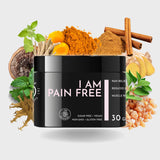
I AM PAIN FREE Gummies (boswellia, turmeric and devil's claw) combine these three ingredients with six other herbs in a sugar-free, vegan gummy. They are a food supplement, not a painkiller, and the research above is on these ingredients, not on our product. Because of the interaction risks, check with your doctor or pharmacist first if you take blood thinners, NSAIDs, diabetes or blood-pressure medicines, or if you are pregnant or have ulcers or gallstones. Unsure what suits you? Try our gummy finder.
See a doctor if…
Get emergency help (112 or 10177) if back pain comes with any of these, based on NHS guidance:
- Numbness, tingling or weakness in both legs.
- Numbness around your genitals or bottom.
- Changes in bladder or bowel control.
- Fever, or sudden severe pain.
- Pain after a serious fall or accident.
See your GP if pain has not improved after a few weeks, stops you doing daily activities, comes with unexplained weight loss, or if a joint is hot, red and swollen. Also see a doctor about chest pain, pain with breathlessness, or a calf that is painful and swollen.
Frequently asked questions
Is it better to rest or move a sore back?
For most simple back pain, keep moving gently. The NHS advises against long periods of bed rest.
Does turmeric work for joint pain?
Studies in knee osteoarthritis show lower pain scores than placebo, but the certainty is low and liver injury has been reported, so speak to a pharmacist before using it, especially high-absorption forms.
Can I take turmeric with ibuprofen or blood thinners?
Ask your doctor or pharmacist first. Turmeric may interact with blood thinners, and NSAIDs already carry stomach-bleeding risks.
Is devil's claw safe?
It is generally used by adults only. Stomach upset, ulcers and gut bleeding have been reported, and it may interact with some medicines.
What exercise is best for knee pain?
A 2024 Cochrane review found no clear differences between exercise types, so pick one you enjoy and will stick with.
Sources
- World Health Organization. WHO releases guidelines on chronic low back pain, 2023. who.int
- Lawford BJ, et al. Exercise for osteoarthritis of the knee. Cochrane Database of Systematic Reviews, 2024. cochrane.org
- NHS. Back pain. nhs.uk
- International Association for the Study of Pain. The differential effects of sleep deprivation on pain perception in individuals with or without chronic pain: a systematic review and meta-analysis (research summary), 2023. iasp-pain.org
- Rattanavipanon, et al. Effect of turmeric products on knee osteoarthritis: a systematic review and network meta-analysis. BMC Complementary Medicine and Therapies, 2025. link.springer.com
- National Center for Complementary and Integrative Health. Turmeric: Usefulness and Safety, 2025. nccih.nih.gov
- Inprasit, et al. Evaluating the efficacy and safety of Curcuma longa, Boswellia serrata, and their mixed formulation in treating knee osteoarthritis: a systematic review and network meta-analysis. Complementary Therapies in Medicine, 2026. sciencedirect.com
- National Center for Complementary and Integrative Health. Boswellia: Usefulness and Safety, 2025. nccih.nih.gov
- Memorial Sloan Kettering Cancer Center. Devil's Claw (About Herbs). mskcc.org
- European Medicines Agency. Harpagophyti radix (devil's claw root), herbal medicinal product. ema.europa.eu
- NHS. NSAIDs. nhs.uk
This article is for general information only and isn't medical advice. Elevate gummies are food supplements and are not intended to diagnose, treat, cure or prevent any disease. Speak to your doctor or pharmacist before starting any supplement, especially if you are pregnant, breastfeeding, taking medication or have a medical condition.