Blue Lotus Flower: Effects, Legal Status and Safety
Share
Blue lotus (Nymphaea caerulea) is a blue water lily from the Nile region that was sacred in ancient Egypt and is now sold as a tea, smoking blend and supplement for relaxation. It contains alkaloids such as nuciferine and apomorphine, which act on dopamine and serotonin receptors, but there are almost no human clinical trials, so its effects and safety are poorly understood. It can cause drowsiness and, at higher amounts, confusion or perceptual changes, so do not combine it with alcohol or sedatives, do not drive after using it, and avoid it if you are pregnant or breastfeeding.
Blue lotus tea had a moment on TikTok, with videos calling it a "natural high", a sleep aid or a "date night" drink. Searches followed: what does blue lotus do, is it legal, is it safe? Here is what is actually known, and what is not.
What is blue lotus?
Despite the name, blue lotus is not a true lotus. It is a water lily (Nymphaea caerulea, also called the blue Egyptian water lily or sacred blue lily). The pink or white "sacred lotus" used in Asian cooking and medicine is a different plant, Nelumbo nucifera. This matters because research on one is often wrongly quoted for the other.
Blue lotus has deep roots in ancient Egyptian culture. Encyclopaedia Britannica notes it was the dominant lotus in Egyptian art, where it is widely associated with the sun and rebirth. Historians still debate how, and how much, it was actually consumed, and modern claims that it was a ceremonial "high" go well beyond the evidence.
What does blue lotus do? The chemistry
Blue lotus contains several alkaloids, mainly:
- Nuciferine, an aporphine alkaloid that in lab studies interacts with dopamine and serotonin receptors.
- Apomorphine, a dopamine-stimulating compound. (A purified form is used as a prescription medicine for Parkinson's disease, at controlled doses, which is very different from drinking a tea.)
Users typically describe mild relaxation, a calm or dreamy mood, and drowsiness. These descriptions come from anecdotal reports, not controlled trials. Importantly, the amount of these alkaloids varies a great deal between products. A 2017 study in the Journal of Psychoactive Drugs tested five blue lotus products sold for vaping: nuciferine was found in all five, but apomorphine in only two. And a 2023 study in Molecules, which compared six authentic blue lotus extracts with eleven commercial products, found that apomorphine and nuciferine were virtually absent from the authentic extracts it tested (which were made for fragrance use). In other words, two products both labelled "blue lotus" can be chemically very different.
What the research says (and doesn't)
This is the short version: there are no good-quality human trials of blue lotus for sleep, mood, anxiety or libido. Most of what you read online about its benefits is based on history, lab research on isolated compounds, animal studies or personal anecdotes.
| Claim you will see online | What the evidence shows |
|---|---|
| "Helps you sleep" | Traditionally used for relaxation; no human sleep trials. |
| "Natural high" or "lucid dreams" | Anecdotal only. Case reports show higher amounts can cause sedation and perceptual changes, which is a safety concern, not a benefit. |
| "Aphrodisiac" | Based on historical interpretation; no human trials. |
| "Rich in antioxidants" | Like many flowers, it contains plant polyphenols; this has not been shown to translate into health outcomes in people. |
Is blue lotus safe?
Because it has hardly been studied in people, nobody can say what a safe dose is. What we do have are case reports.
A 2023 case series in Military Medicine described five patients who came to an emergency department after using blue lotus, four by vaping and one in an infused drink. Their main symptoms were sedation and perceptual disturbances, including hallucinations. All five recovered with supportive care. The authors pointed out that blue lotus is not detected by standard urine drug screens, which can make diagnosis harder.
There is another, less obvious risk: what is in the product may not be blue lotus at all. A 2024 study in the Journal of Analytical Toxicology examined cases between 2020 and 2023 linked to products labelled as "blue lotus" (mostly vaping products) and found that the large majority actually contained synthetic cannabinoids, dangerous lab-made drugs, rather than just the plant. The authors warned that innocent-sounding botanical branding can mislead users, police and doctors. This is a strong reason to avoid blue lotus vapes and products from unknown sellers.
Who should avoid blue lotus
- Anyone who is pregnant, trying to conceive or breastfeeding: there is no safety data.
- Children and teenagers.
- People taking sedatives, sleeping tablets, antihistamines that cause drowsiness, opioids or anxiety medication, because effects may add up.
- People taking medicines that act on dopamine or serotonin, such as Parkinson's medicines, antipsychotics or antidepressants. Interactions have not been studied, but are possible in theory.
- Anyone with a history of psychosis or a serious mental health condition.
- Anyone who needs to drive, operate machinery or work at heights afterwards.
Blue lotus and alcohol
Social media sometimes promotes blue lotus "wine" or cocktails, echoing the Egyptian story. Combining two things that can make you drowsy is not a good idea. Alcohol may add to sedation and impair judgement and coordination further. Keep them separate, and never drive after using either.
Is blue lotus legal?
Legal status varies by country and is changing, so check the rules where you live.
- South Africa: blue lotus tea and supplements are openly sold. We could not find a specific listing for blue lotus in South Africa's medicine schedules, but we were also unable to confirm a formal regulatory position from SAHPRA, so treat this as unverified.
- United States: it is not a federally controlled substance, and it is not approved by the FDA as a medicine. You may read online that Louisiana has banned it; when we checked the current text of Louisiana's hallucinogenic plant law (La. R.S. 40:989.1), blue lotus was not on its list, so that claim may be out of date.
- Elsewhere: some countries restrict or ban it, so check local rules before you travel with it.
Legal does not mean proven safe or effective. Food supplements in South Africa are not evaluated for effectiveness in the way medicines are.
How people use blue lotus
The most common traditional-style preparation is a tea made by steeping the dried flowers in hot water. It is also sold as extracts, tinctures and gummies. If you choose to try it:
- Buy from a reputable supplier that names the plant (Nymphaea caerulea) and the amount on the label.
- Avoid vapes, smoking blends and "resins" from unknown sellers.
- Start low, use it in the evening at home, and see how you react.
- Do not combine it with alcohol, sleep medication or other calming herbs unless your doctor agrees.
If better sleep is your goal, the basics (consistent sleep times, less caffeine after midday, a dark, cool room) have far stronger evidence. Read natural sleep support: what actually helps and magnesium glycinate for sleep.
See a doctor if…
- You feel confused, very drowsy, see or hear things that aren't there, or feel agitated or paranoid after using blue lotus
- You have a racing heart, chest pain, fainting or trouble breathing
- Someone cannot be woken properly, is having a seizure or has collapsed: call 112 or 10177 immediately, and tell the medical team exactly what product was used
- You find you rely on blue lotus or other substances to sleep or cope with stress. For mental health support, call SADAG on 0800 567 567
Where Elevate fits
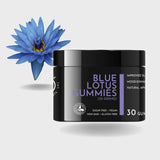
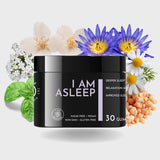
Our Blue Lotus Gummies contain 1000mg blue lotus flower (Nymphaea caerulea) extract per gummy, and blue lotus is one of six evening herbs in I AM ASLEEP Gummies. Blue lotus is traditionally used for relaxation in the evening; as explained above, it has not been tested in human clinical trials. Do not use them if you are pregnant or breastfeeding, combine them with alcohol or sedating medicines, or drive afterwards. Learn more in our blue lotus ingredient guide.
Frequently asked questions
Does blue lotus get you high?
At typical tea or supplement amounts, most people describe mild relaxation and drowsiness. At higher amounts, case reports describe sedation and hallucinations. Products sold as "blue lotus" vapes have been found to contain synthetic cannabinoids, which are far more dangerous.
Is blue lotus the same as lotus root or lotus seed?
No. Blue lotus is a water lily (Nymphaea caerulea). Lotus root and seeds come from the sacred lotus (Nelumbo nucifera), a different plant.
Will blue lotus show up on a drug test?
Standard urine drug screens do not detect blue lotus, according to the 2023 case series. However, products contaminated with other drugs could cause a positive result.
Can I drink blue lotus tea every night?
There is no research on regular, long-term use, so nobody can say whether it is safe. If you use it, keep amounts modest and take regular breaks.
Is blue lotus safe in pregnancy?
There is no safety data, so avoid it if you are pregnant, trying to conceive or breastfeeding.
Sources
- Schimpf M, et al. Toxicity from blue lotus (Nymphaea caerulea) after ingestion or inhalation: a case series. Military Medicine, 2023. pubmed.ncbi.nlm.nih.gov/34345890
- Seither JZ, et al. Synthetic cannabinoid identification in cases associated with blue lotus and valerian root vaping products. Journal of Analytical Toxicology, 2024. pubmed.ncbi.nlm.nih.gov/39082147
- Poklis JL, et al. The blue lotus flower (Nymphea caerulea) resin used in a new type of electronic cigarette, the re-buildable dripping atomizer. Journal of Psychoactive Drugs, 2017. pubmed.ncbi.nlm.nih.gov/28266899
- Dosoky NS, et al. Chemical composition, market survey, and safety assessment of blue lotus (Nymphaea caerulea Savigny) extracts. Molecules, 2023. doi.org/10.3390/molecules28207014
- Encyclopaedia Britannica. Egyptian lotus. britannica.com
- Louisiana Revised Statutes 40:989.1. Unlawful production, manufacture, distribution, or possession of hallucinogenic plants (2025 text). law.justia.com
This article is for general information only and isn't medical advice. Elevate gummies are food supplements and are not intended to diagnose, treat, cure or prevent any disease. Speak to your doctor or pharmacist before starting any supplement, especially if you are pregnant, breastfeeding, taking medication or have a medical condition.