Creatine for Women: Benefits, Menopause, Myths and Dosage
Share
Yes, creatine is suitable for most healthy women, and it is one of the best-studied supplements available. Taken at 3 to 5 g a day alongside strength training, it can support muscle strength and performance, and research is now looking at its role in bone health, menopause and the brain. It will not make you "bulky", it is not a steroid, and a well-designed 2025 trial found no link to hair loss.
Creatine used to be marketed almost entirely to young men in gyms. That has changed fast. Searches for "creatine for women", "creatine and menopause" and "creatine for perimenopause" have climbed sharply, driven by women's health podcasts, strength-training trends and a growing number of studies in women. Here is what the research actually shows, and where it is still thin.
What creatine is and why women may benefit
Creatine is a natural compound made in your liver, kidneys and pancreas and found in meat and fish. Your muscles and brain use it to quickly recycle energy (ATP) during short, intense effort. Supplements top up those stores.
A 2021 review in Nutrients by Smith-Ryan and colleagues, one of the most cited papers on the topic, reported that women have an estimated 70 to 80% lower total creatine stores than men and usually eat less creatine in their diet. Women who eat little or no meat or fish get even less. The authors suggest creatine may be relevant across a woman's life, especially during hormonal shifts such as the menstrual cycle, after pregnancy and around menopause.
Strength and muscle: what the trials show
Creatine's best-established use is improving performance in repeated bursts of high-intensity exercise, such as lifting weights or sprints. For muscle mass, the results in women are more mixed than many social media posts suggest:
- A 2022 meta-analysis of 35 randomised trials found creatine plus resistance training increased lean mass, but the average gain in women (about 0.3 kg) was smaller than in men and not statistically significant.
- A 2025 meta-analysis of eight trials in older adults (482 people, mostly postmenopausal women in six of the studies) found small but significant gains in lean mass and borderline gains in leg strength when creatine was added to resistance training.
- In almost every study, creatine on its own, without training, did little for muscle.
The takeaway: creatine is a helper for training, not a replacement for it. If you lift two or three times a week, it may help you train a little harder and recover between sets.
Creatine and bone health after menopause
Bone loss speeds up after menopause, so this is a common question. The largest trial so far, published in 2023 by Chilibeck and colleagues, gave 237 postmenopausal women creatine (0.14 g per kg of body weight a day) or a placebo for two years, alongside an exercise programme.
- Creatine did not improve bone mineral density at the hip or spine compared with placebo.
- It did help maintain some measures of hip bone shape linked to bone strength, and walking speed improved.
- Reports of the trial also note an increase in lean tissue.
So creatine is not a bone-density supplement. Calcium, vitamin D, protein and, above all, weight-bearing and resistance exercise remain the foundations. Speak to your doctor about a bone density scan if you have risk factors.
Perimenopause, menopause and "brain fog"
This is the newest and most talked-about area. In 2025 the first randomised trial of creatine in perimenopausal and menopausal women (called CONCRET-MENOPA) was published in the Journal of the American Nutrition Association. Thirty-six women aged 40 to 60 took one of three creatine products or a placebo for eight weeks.
- The 1,500 mg creatine hydrochloride group had faster reaction times and higher brain creatine levels than placebo, and reported less fatigue and fewer concentration problems.
- No weight gain was seen, and side effects were minor.
The limits matter: it was small, short, did not use creatine monohydrate (the form used in most research), relied partly on self-reported symptoms, and was partly supported by a creatine manufacturer that supplied the product. It is a promising start, not proof.
More broadly, a 2024 meta-analysis of 16 trials found creatine had a modest positive effect on memory, with signs of a stronger effect on processing speed in women. We cover the brain research, including sleep deprivation and mood studies, in creatine and your brain.
Myths about creatine for women
"Creatine makes you bloated"
Creatine pulls water into muscle cells, which is part of how it works. Some people notice a small rise on the scale in the first weeks, usually from a high-dose "loading" phase (around 20 g a day). At a steady 3 to 5 g a day, any change is typically small and it is not fat. A 2021 review of common creatine misconceptions notes that creatine can increase total body water. That is water, not fat, and at standard doses the change is usually modest.
"It will make me bulky"
Building large muscles takes years of heavy training, enough food and, for most women, hormones that are simply not designed for it. Creatine does not change that. In the menopause trial, there was no weight gain at all.
"Creatine causes hair loss"
This myth comes from one small 2009 study in male rugby players, which found changes in DHT (a hormone linked to male-pattern hair loss) after three weeks of creatine but never measured hair. In 2025, a 12-week randomised trial in 38 men taking 5 g a day directly measured hair density, follicles and thickness, and found no differences from placebo and no meaningful change in DHT. Evidence in women specifically is limited, but there is no good evidence of a link.
"It is a steroid" or "it is bad for your kidneys"
Creatine is not a hormone or steroid. In healthy people, research has not shown kidney harm at normal doses. It can raise creatinine on a blood test, which can look like a kidney issue, so tell your doctor you take it. If you already have kidney disease, do not take creatine unless your doctor says it is safe.
How much creatine should women take?
- Dose: 3 to 5 g of creatine monohydrate a day is the amount used in most research. A loading phase is optional.
- Timing: any time of day. Consistency matters more than timing.
- Form: creatine monohydrate has by far the most evidence.
- How long: muscle stores fill up over about three to four weeks at this dose.
- Fluids: drink normally through the day.
Gummy or powder? Check what is really inside
Gummies have made creatine more appealing for many women, but quality varies. In 2024, US supplement company NOW tested 12 creatine gummy brands and reported that six did not meet their label claims, a finding some brands disputed. In 2025, SuppCo reported that four of six gummy brands it tested contained almost no creatine. Both were small tests on US brands, but they show why it pays to check.
When choosing any creatine product:
- Look for the amount of creatine monohydrate per serving, not just "creatine blend".
- Make sure a daily serving reaches around 3 g or more.
- Ask the brand whether it can share independent laboratory results for its product.
For a full comparison of cost and convenience, see creatine gummies vs powder.
Where Elevate fits
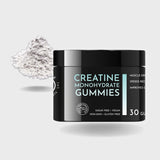
Our Creatine Monohydrate Gummies contain 1,500 mg of creatine monohydrate per gummy, so three gummies give 4,500 mg, within the range used in research. They are sugar-free and vegan, which suits women who eat little or no meat. Pair them with regular strength training; you can also explore our For Her range or read our creatine ingredient guide.
Who should avoid creatine or check first
- Anyone with kidney disease or reduced kidney function.
- Pregnant or breastfeeding women: there is not enough safety data, so speak to your doctor first.
- Anyone taking medicines that affect the kidneys, or diuretics.
- People with bipolar disorder: a small number of manic episodes have been reported in creatine trials, so check with your psychiatrist.
- Under-18s, unless advised by a doctor.
See a doctor if…
- You have new swelling in your legs or face, or are passing much less urine.
- Your periods change significantly, become very heavy, or return after menopause.
- Menopause symptoms such as hot flushes, poor sleep or low mood are affecting daily life; effective medical options exist.
- You notice sudden hair loss or patchy hair loss, which has many medical causes worth checking.
- Low mood lasts more than two weeks. SADAG's helpline is 0800 567 567.
Frequently asked questions
Is creatine safe for women to take every day?
For healthy adults, 3 to 5 g a day is well studied and generally well tolerated. Check with your doctor first if you have kidney disease, are pregnant or breastfeeding, or take regular medication.
Will creatine make me gain weight?
Some people gain a little water weight in muscle at first, especially with loading doses. It is not fat, and studies at standard doses in women show little or no change on the scale.
Does creatine help with menopause?
Research is early. One small 2025 trial found improvements in reaction time and self-reported fatigue in midlife women, and creatine with weight training may help maintain muscle. It is not a treatment for menopause symptoms.
Can creatine cause hair loss in women?
There is no good evidence that it does. A 2025 trial measuring hair directly found no effect in men, and the old DHT study never measured hair at all.
Do I need to do a loading phase?
No. A steady 3 to 5 g a day fills your muscle stores over about a month without the stomach upset or water weight some people get from loading.
Sources
- Smith-Ryan AE, Cabre HE, Eckerson JM, Candow DG. Creatine supplementation in women's health: a lifespan perspective. Nutrients, 2021. mdpi.com
- Delpino FM, et al. Influence of age, sex, and type of exercise on the efficacy of creatine supplementation on lean body mass: a systematic review and meta-analysis. Nutrition, 2022. sciencedirect.com
- Liu et al. The impact of creatine supplementation associated with resistance training on muscular strength and lean tissue mass in the aged: a systematic review and meta-analysis. European Review of Aging and Physical Activity, 2025. springer.com
- Chilibeck PD, et al. A 2-year randomized controlled trial on creatine supplementation during exercise for postmenopausal bone health. Medicine & Science in Sports & Exercise, 2023. Summary: NutraIngredients
- Korovljev D, et al. Creatine hydrochloride and creatine ethyl ester supplementation in perimenopausal and menopausal women (CONCRET-MENOPA): a randomized controlled trial. Journal of the American Nutrition Association, 2025. Summary: PsyPost
- Luo et al. Effects of creatine supplementation on cognitive function in adults: a systematic review and meta-analysis. Frontiers in Nutrition, 2024. frontiersin.org
- Antonio J, et al. Common questions and misconceptions about creatine supplementation: what does the scientific evidence really show? Journal of the International Society of Sports Nutrition, 2021. jissn.biomedcentral.com
- Lak M, et al. Does creatine cause hair loss? A 12-week randomized controlled trial. Journal of the International Society of Sports Nutrition, 2025. Nova Southeastern University
- Nutritional Outlook. NOW tests creatine gummies, identifies limitations in third-party gummy testing. 2024. nutritionaloutlook.com
- Jeryous Fares B, et al. The effect of creatine monohydrate on mental disorders: a systematic review of randomized controlled trials. Canadian Journal of Psychiatry, 2026. journals.sagepub.com
- Yahoo Health. Do creatine gummies actually work? Lab tests reveal staggering truth (SuppCo testing). 2025. health.yahoo.com
This article is for general information only and isn't medical advice. Elevate gummies are food supplements and are not intended to diagnose, treat, cure or prevent any disease. Speak to your doctor or pharmacist before starting any supplement, especially if you are pregnant, breastfeeding, taking medication or have a medical condition.